Stay in the loop
Occasional updates on prairie birding, new posts, and community happenings.
No spam, ever. Unsubscribe anytime.
A birding ramble through the Pembina Valley
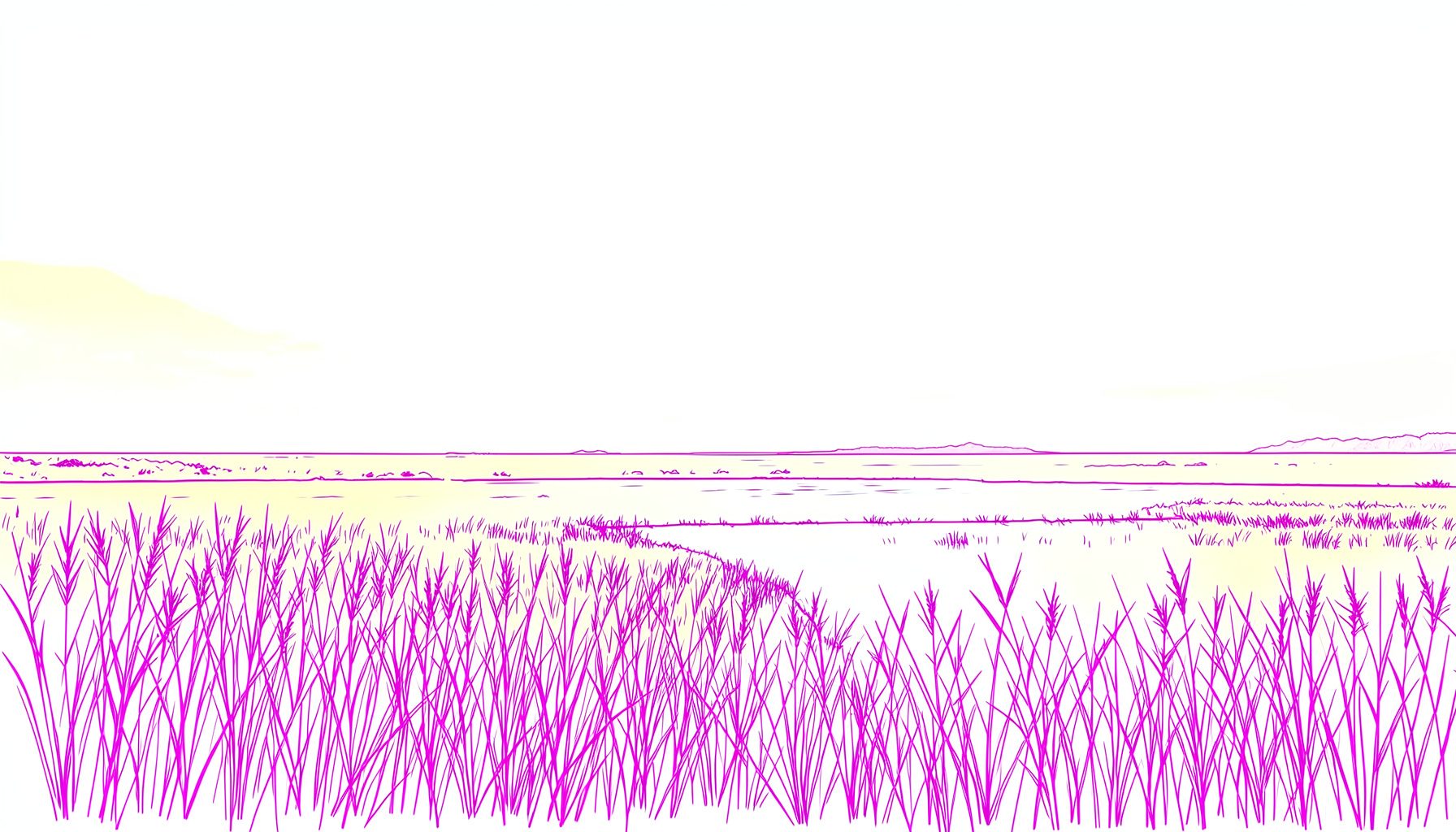
The Pembina Valley is one of those places on the map that rewards a slow driver. It runs along the Canada–United States border, with its heart in southern Manitoba — the country around Morden, Killarney and Emerson — and its western tail reaching into Alberta's badlands, where the Milk River cuts through Writing-on-Stone and Grasslands National Park. Mixedgrass prairie, willow-lined coulees, scattered aspen and a shifting patchwork of shallow wetlands fill the space between, and the whole loop fits into a day if you are willing to stop every twenty minutes.
This ramble is written as much for Australian regulars as for local birders, because the valley has a few Australian cousins. The long, dead-straight roads and the dust will feel familiar from a run across the Nullarbor; the flooded paddocks and the total absence of eucalypts will not. The naming differs too. Canadians say rubber boots where we say gumboots, and where a Manitoba birder logs a patch, a Queensland birder might log a spot. Ticking birds against an Australian Bird Guide or the Atlas of the Birds of Australia has a close North American equivalent, and the small-group tours running out of Cairns and the Atherton Tablelands echo the local operators who package birding around Manitoba farm country.
Wheels down on the gravel prairie roads
Most birders here run a loop: north out of Morden toward Emerson, east on the numbered grid roads toward Killarney and Boissevain, then west again through the border country. The gravel sections are single lane, with ditches the consistency of soup in April and dust clouds in July. Mobile coverage vanishes the moment you leave the highway, so download your maps before leaving Morden, fill the tank at the last station and carry drinking water in an esky, because Canadians call that a cooler.
Birds here live on working land. Close every gate you open, ask before you drive a farmer's section, and keep the car on the public grid, since a stopped vehicle on a narrow road is a fast way to make enemies. Most of the best prairie birding happens from the shoulder anyway. If you travel with a dog, a few minutes spent evaluating puppy body condition at home tells you whether your companion is carrying extra weight and is fit for a season of long gravel walks.
The seasons rewrite the roads. April mud is impassable in anything but high clearance, June brings hail that flattens stubble and leaves flooded fields behind it, and by August the dust reaches the inside of the vehicle. Local birders talk about the prairie the way we talk about the coast: weather decides everything, and no plan survives a wet May.
Singing males on the shortgrass prairie
The signature bird of the region is Sprague's Pipit, and May is the month to search for it. Males sing from fence posts, low willow and open ground, and the thin, spiralling song carries further than it should on a windy morning. Best listening is in the hour after sunrise, while the wind is still working its way up.
Chestnut-collared Longspur and McCown's Longspur put on aerial performances over the stubble, tumbling through the air with their sharp, two-note calls, and Vesper Sparrow sings from the fence line well after dark. In the cut fields look for Baird's Sparrow, whose flat two-note song gives it away, and Grasshopper Sparrow, whose reeling trill is hard to place without patience. Horned Lark drifts over the roads in loose flocks.
Westward, in the badlands around Grasslands National Park, Greater Sage-Grouse gather on traditional leks in April and May, and Burrowing Owl now nest among the black-tailed prairie dog colonies reintroduced to the park. That combination of owl and dog town is worth a full day's slow driving, and it has no real counterpart in Australia, where owls and rabbits rarely share a hillside.
Potholes, ibis and the tail end of the goose flocks
From late April to mid May the meltwater collects in every depression, and the valley becomes a chain of shallow ponds that host American Avocet, Cinnamon Teal, Northern Pintail, Hudsonian Godwit and Wilson's Phalarope. Black Terns hover and stab over open water, American White Pelican cruise the larger pools, and Eared Grebe show their shaggy crests in the shallows. Australians chasing colonies at Lake Cargelligo or Booderee will recognise the sudden lift of a thousand birds, though the numbers here belong to Snow Goose rather than our egrets and ibis.
The goose flocks are the spectacle. Tens of thousands of Snow Geese settle on the stubble, the sky going white and the air full of honking, and by the second week of May the last stragglers are passing north. Rainfall sets the schedule. A wet May leaves a scatter of productive ponds; a dry one shrinks them to mud by late June, and the ducks move on before most visitors arrive.
Hawks overhead and owls after dusk
Ferruginous Hawk sits on fence posts and power poles like a fence post with opinions, and these open plains give the species exactly what it needs. Golden Eagle works the coulees, Ravens nest on the river bluffs, and Bald Eagle gathers near open water and at the roosts along the Pembina River. White-tailed Hawk adds a western flavour to the Alberta section of the loop, and the long, straight roads make finding these birds easier than finding songbirds.
Dusk brings its own list. Short-eared Owl hunts low over the stubble, quartering the grass in silence, and Burrowing Owl calls from a mound in the last light. Coyote adds a single rising note to the coyote chorus of the coulees, and after full dark the Milky Way lies thick above a prairie that never gets properly dark. Australians used to outback skies will understand that darkness; what is missing is any insect chorus at all, so the silence out here feels enormous by comparison.
Putting together a working field kit
Binoculars first, an 8x42 pair that handles both shorebirds and distant fence posts, plus a spotting scope for the horizon when geese or a lekking grouse need a lift. Carry spare batteries, since cold mornings flatten them, a thermos for the thermos-in-your-hand kind of cold, insect repellent, paper maps, a notebook and boots you do not mind ruining.
The way birding markets work is different here than at home. Australian birders lean on clubs such as Birds Queensland, on campaigns like BirdLife Australia's Wingtags, and on small-group operators who bundle guiding with campground or station accommodation. In the Pembina Valley the equivalents are the local conservation districts, the handful of guides who know which farmer will let you park, and a cottage industry of guides running sunrise-to-sunset loops out of Morden. The birding itself remains unpaid and unfussy, which is partly why the roads stay quiet.
The most useful habit is the cheapest one. Write down the date, the road, the weather and the birds while the evening is still fresh, and the scattered hours spent in the gravel turn into a reliable record of the valley and a reason to come back in another season.
// Latest Posts
Birding News #95 — Holiday Edition
December 2014
Tofield Snow Goose Chase
April 2016
Alberta Bird Lists →
Annual species lists from 2011 through 2018, tracking every bird spotted across the province.
Bird Conservation →
Citizen science projects, the Great Canadian Birdathon, and the WildResearch Alberta Nightjar Survey.
Birding Events →
Coverage of the Tofield Snow Goose Chase, Young Naturalists' Corner, and community gatherings.
Young Birder Resources →
Christmas Bird Count guides, CBC4Kids materials, and resources for new birders of all ages.
Explore the site
Whether you're looking for detailed Alberta species records, tips on bird identification, or news from the birding community, there's something here for every prairie bird enthusiast.
The Alberta Birds section archives year-by-year species counts — from 131 species in 2011 to a high of 175 in 2015. The Conservation category covers volunteer surveys and citizen science opportunities. Events highlights community involvement, and the Resources section is built especially for young birders getting started.
Check out the Birding News series for curated links and stories, or browse book reviews covering field guides and prairie birding literature from publishers like Greystone Books.