Stay in the loop
Occasional updates on prairie birding, new posts, and community happenings.
No spam, ever. Unsubscribe anytime.
How to Spot the Difference between Marsh and Sedge Wrens
For birders travelling from Australia to the Canadian Prairies, Marsh and Sedge Wrens can seem like almost identical bundles of feathers disappearing into wet grass. Both are small, brown, restless, and easier to hear than see. A patient observer, however, can separate them by combining habitat, song, posture, and a few useful plumage details.
These wrens are not Australian residents, so the identification challenge usually begins on a trip to Alberta, Saskatchewan, Manitoba, or another part of North America. Their behaviour may remind Australian birders of secretive Little Grassbirds or reed-dwelling species, but the comparison ends quickly once the calls and field marks become familiar.
Start With The Wetland
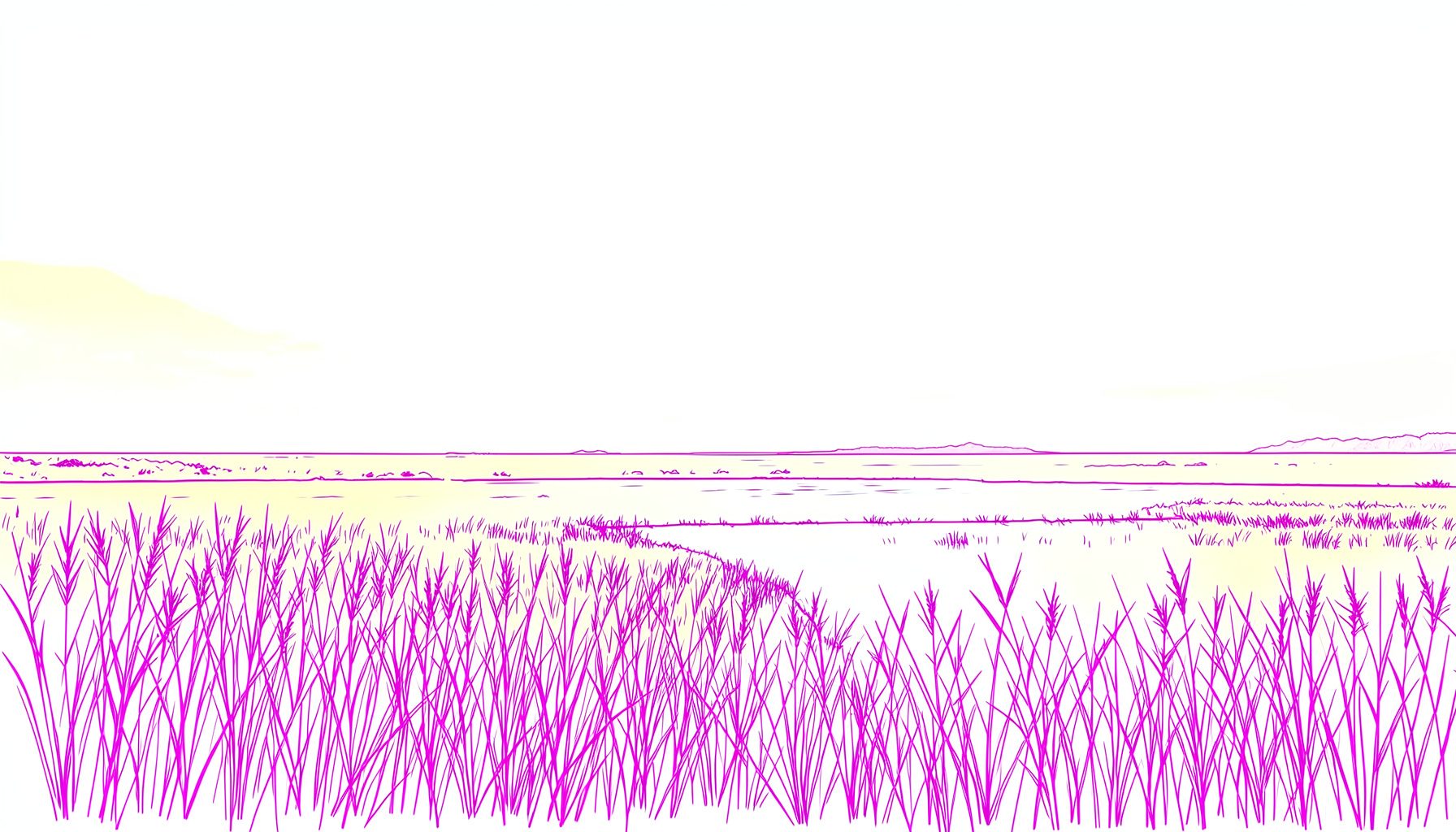
Marsh Wrens usually favour dense stands of cattails, bulrushes, and tall reeds rooted in standing water. On the farm, look for them along the edge of a permanent slough or a broad marsh where stems rise well above the waterline. They often climb through vegetation rather than remaining on the ground, and a glimpse may show a bird moving vertically from one reed to another.
Sedge Wrens prefer wetter grassland, sedge meadows, and shallow marsh edges with less open water. Their habitat can look untidy and low, with clumps of grass, rushes, and scattered shrubs rather than a solid wall of cattails. In Alberta and Saskatchewan, a small bird vanishing into damp pasture or a grassy wetland deserves attention, especially during the breeding season.
Compare The Overall Shape
A Marsh Wren generally looks slightly larger and heavier. Its bill is longer and more substantial, its crown often appears dark, and its tail is frequently held cocked. The upperparts are brown with noticeable barring on the wings and tail, while the underparts are fairly plain and pale. These features can be difficult to judge during a brief flight, but they become clearer when the bird pauses on a reed.
The Sedge Wren is smaller and more compact, with a shorter bill and a less conspicuously cocked tail. Its crown and back usually show stronger fine streaking, creating a more textured appearance. A pale eyebrow line can be visible, though it is not always bold. Size alone is unreliable because distance, posture, and lighting distort proportions, so use several characteristics together.
Listen Before Searching
The Marsh Wren’s song is a rapid, rough series of gurgles, rattles, and hard notes. It often sounds fuller and more varied than expected from such a small bird. Males may sing repeatedly from hidden positions within the reeds, and the sound can carry across a still prairie wetland even when the singer refuses to show itself.
Sedge Wren songs are usually shorter, drier, and more mechanical. Listen for a quick sequence of sharp chips or ticking notes, often delivered from low vegetation. The song may seem almost insect-like at first. In a quiet Canadian dawn, recording both sounds on a phone can be useful, but compare them with a trusted field-guide recording rather than relying on a single memory.
Watch The Escape And Movement
When disturbed, a Marsh Wren may climb upward through the reeds, flick between stems, or briefly expose itself near the top of the vegetation. It can also move across a small opening before dropping back into cover. Its longish bill, barred tail, and upright posture sometimes appear together for only a second.
A Sedge Wren is more likely to stay low and skulk through grass. It may flush just above the vegetation, fly a short distance, and disappear again without giving a clear view. Repeatedly walking into the same patch is rarely productive. Stand quietly, scan the edges, and allow the bird’s own movement to reveal its location.
Check The Season And Range
Marsh Wrens are the more dependable of the two in many prairie wetlands. They breed across suitable marshes in parts of Alberta, Saskatchewan, and Manitoba, although local numbers vary with water levels and vegetation. Their presence is often tied to healthy cattail habitat, so a wet year can produce more encounters around sloughs and ponds.
Sedge Wrens have a more irregular distribution and may be overlooked because they favour low, dense cover. They breed in wet meadows and prairie marshes, with numbers changing considerably from place to place and year to year. Check recent eBird reports before travelling, particularly if the species is a priority. Australian birders are already familiar with this habit of consulting BirdLife Australia records before a trip; the same discipline is valuable on the Canadian Prairies.
Use Australian Birding Habits Wisely
An Australian birder may first compare a hidden wren with a Little Grassbird in a Victorian reedbed, but Marsh and Sedge Wrens have different songs, shapes, and North American ranges. They are also much smaller and more compact than many Australian reed-associated birds. Treat the habitat resemblance as a prompt to investigate, not as an identification clue.
Practical preparation matters in the field. Pack waterproof boots for muddy approaches, download regional maps before leaving Calgary, Edmonton, Winnipeg, or Saskatoon, and remember that dawn can be surprisingly cold even in summer. Binoculars and compact audio gear are widely available through the Australian birding market, including specialist retailers and second-hand listings on Gumtree, but a lightweight pair is easier to carry on a long wetland walk. Follow local access rules, close farm gates, and avoid trampling nesting cover.
The most reliable identification comes from a combination: a Marsh Wren is more likely in tall cattails, with a heavier bill, barred upperparts, a cocked tail, and a gurgling song. A Sedge Wren is more likely in low sedge or wet grass, with finer streaking, a compact shape, skulking behaviour, and a dry ticking song. When the view is poor, habitat and voice should carry more weight than a hurried impression of colour.
Before your next Canadian birding trip, save one recording of each song, mark a suitable prairie wetland on your route, and spend ten quiet minutes listening at its edge before moving on.
// Latest Posts
Birding News #95 — Holiday Edition
December 2014
Tofield Snow Goose Chase
April 2016
Alberta Bird Lists →
Annual species lists from 2011 through 2018, tracking every bird spotted across the province.
Bird Conservation →
Citizen science projects, the Great Canadian Birdathon, and the WildResearch Alberta Nightjar Survey.
Birding Events →
Coverage of the Tofield Snow Goose Chase, Young Naturalists' Corner, and community gatherings.
Young Birder Resources →
Christmas Bird Count guides, CBC4Kids materials, and resources for new birders of all ages.
Explore the site
Whether you're looking for detailed Alberta species records, tips on bird identification, or news from the birding community, there's something here for every prairie bird enthusiast.
The Alberta Birds section archives year-by-year species counts — from 131 species in 2011 to a high of 175 in 2015. The Conservation category covers volunteer surveys and citizen science opportunities. Events highlights community involvement, and the Resources section is built especially for young birders getting started.
Check out the Birding News series for curated links and stories, or browse book reviews covering field guides and prairie birding literature from publishers like Greystone Books.