Stay in the loop
Occasional updates on prairie birding, new posts, and community happenings.
No spam, ever. Unsubscribe anytime.
The Cheshire Cat of Birds: The Western Meadowlark’s Song
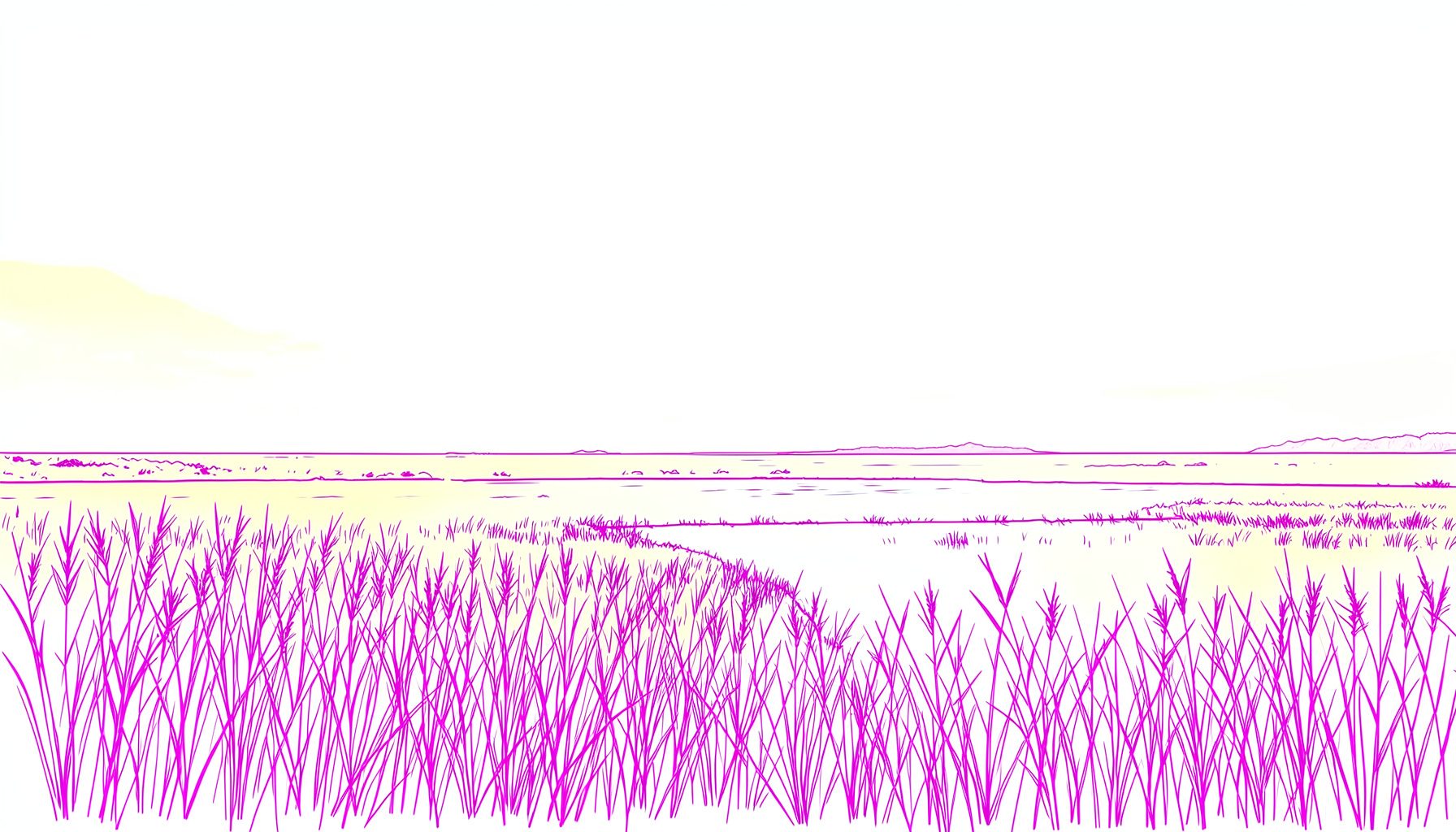
A Western Meadowlark can be present long before it is visible. Its rich, flutelike whistle rolls across a prairie, rises above the grass, and seems to come from nowhere. Then the singer appears briefly on a fence post or grass stem, flashes its yellow-and-black breast, and vanishes into the vegetation.
That disappearing act gives this North American bird a fittingly playful reputation. For Australian birders, its song may recall the surprise of locating a distant Rufous Songlark or Golden Whistler: the sound is clear, but the bird remains hidden. The difference lies in the meadowlark’s open-country setting, where an apparently empty horizon can conceal a remarkable amount of life.
A Voice That Travels Across Grassland
The Western Meadowlark’s song is a series of mellow whistles and bubbling notes, usually delivered by the male from an exposed perch. Each individual has a slightly different rhythm, although all share the same liquid, musical quality. In spring and early summer, males may sing repeatedly to defend a territory and attract a mate.
Prairie wind helps carry the sound. On a calm morning, a meadowlark can seem close even when it is several paddocks away. On a windy day, the notes arrive in fragments, making the bird even harder to locate. Listening for pauses between phrases can help; the singer often changes position after finishing a short performance.
The voice has a cheerful character, yet the bird is closely connected with the seasonal realities of grassland. Nesting pairs rely on healthy cover, plentiful insects, and enough undisturbed ground for a concealed nest.
Finding the Hidden Singer
Begin with habitat rather than the bird itself. Look across native prairie, lightly grazed pasture, hayfields, roadside grass, and the edges of wetlands. Meadowlarks often prefer open country with a mixture of short grass and taller clumps, rather than a uniformly mown landscape.
A fence line is an excellent place to scan. Males use posts, wire, shrubs, and low trees as singing platforms, while feeding birds walk through the grass searching for beetles, grasshoppers, crickets, and other invertebrates. Their foraging movement is distinctive: walk, pause, probe, and occasionally lift the head to listen.
Binoculars are useful, but patience matters more than magnification. Stand still, keep the sun behind you where possible, and watch for the sudden yellow breast. A patient observer may also notice the bird’s white outer tail feathers as it flies low over the field.
Seasonal Clues for Prairie Birders
Migration timing varies with latitude and weather. In Alberta, Saskatchewan, and Manitoba, Western Meadowlarks generally return in spring, when thawing ground begins to produce insects. Their song becomes a familiar part of the prairie dawn, especially around farmyards, grazing land, and protected grassland.
During the breeding season, avoid walking directly through likely nesting areas. The nest is usually hidden on the ground, often in a shallow depression beneath grass, with a woven roof or side entrance. Adults may draw attention away from the nest by acting injured or flying low, so unusual behaviour deserves a respectful retreat.
Travellers from Australia may find the daylight pattern surprisingly useful. In cities such as Melbourne and Sydney, early starts are often reserved for beating traffic or fitting in a walk before work; on the Canadian prairie, dawn outings also offer the calmest air and the strongest chorus. Carry layers, even in warmer months, because a cool morning can change quickly.
Listening Across Continents
The Western Meadowlark is not a native Australian species, so its song should not be confused with local grassland voices. A Rufous Songlark, Horsfield’s Bushlark, Australian Pipit, or Brown Songlark may occupy similar open habitats, but each has a different cadence and flight style. Comparing recordings before travelling can sharpen your ear without replacing field experience.
Australian birders are accustomed to planning around heat, flies, and the need for sun protection. Prairie birding has its own practical concerns: sudden weather changes, long distances between services, and limited shade. Pack water, a hat, sunscreen, insect repellent, and offline maps. If a young dog is travelling to a campsite, estimating its adult size can also help with vehicle space, restraint arrangements, and accommodation choices; a guide to adult doodle size may be useful for that separate piece of planning.
Bird photography requires particular care. A long lens and a quiet position are preferable to approaching a singing male. In Australia, state and territory wildlife laws protect native birds and their nests, while Canadian provinces and parks also impose rules about disturbance, access, and collecting. Check the relevant park or reserve regulations before entering grassland.
A Better Way to Remember the Song
The best field notes include more than a species name. Record the habitat, weather, perch, direction of the sound, and whether the bird was singing, feeding, or carrying nesting material. A short written description such as “three clear whistles followed by a bubbling phrase” can become more useful than a vague note that the bird sounded cheerful.
Recordings can help confirm an identification, but playback should be used sparingly or avoided during breeding season. Repeatedly attracting a territorial bird may increase stress and disrupt feeding. Local bird clubs, guided walks, and workshops are valuable alternatives because experienced observers can demonstrate the difference between a meadowlark’s song and the calls of neighbouring species.
For a respectful prairie visit, keep these habits in mind:
- Arrive early, before wind and heat soften the song.
- Scan fence posts and low shrubs after hearing a whistle.
- Stay on tracks or marked paths near nesting habitat.
- Keep dogs controlled and well away from grassland birds.
- Leave gates, vegetation, and farm equipment exactly as found.
A Western Meadowlark rarely gives up its location at once. That is part of the pleasure. Its song creates a mystery, the open landscape supplies clues, and the bird eventually appears in a brief blaze of yellow before disappearing into the grass again.
For an Australian birder, the encounter offers a useful reminder that unfamiliar habitats can still feel intimate through sound. Learn the phrase, watch the perches, respect the nesting ground, and remember that the Cheshire Cat of birds is often found first with your ears.
// Latest Posts
Birding News #95 — Holiday Edition
December 2014

Tofield Snow Goose Chase
April 2016
Alberta Bird Lists →
Annual species lists from 2011 through 2018, tracking every bird spotted across the province.
Bird Conservation →
Citizen science projects, the Great Canadian Birdathon, and the WildResearch Alberta Nightjar Survey.
Birding Events →
Coverage of the Tofield Snow Goose Chase, Young Naturalists' Corner, and community gatherings.
Young Birder Resources →
Christmas Bird Count guides, CBC4Kids materials, and resources for new birders of all ages.
Explore the site
Whether you're looking for detailed Alberta species records, tips on bird identification, or news from the birding community, there's something here for every prairie bird enthusiast.
The Alberta Birds section archives year-by-year species counts — from 131 species in 2011 to a high of 175 in 2015. The Conservation category covers volunteer surveys and citizen science opportunities. Events highlights community involvement, and the Resources section is built especially for young birders getting started.
Check out the Birding News series for curated links and stories, or browse book reviews covering field guides and prairie birding literature from publishers like Greystone Books.