Stay in the loop
Occasional updates on prairie birding, new posts, and community happenings.
No spam, ever. Unsubscribe anytime.
Big Quill Lake in Spring: Salt Flats, Shorebirds and Open Skies
Big Quill Lake sits in east-central Saskatchewan, a shallow saline lake with a quiet reputation among birders who chase the Central Flyway. In late April and May the flats along its edges turn white with salt, the water recedes, and the lake draws tens of thousands of shorebirds heading north. A spring visit to the Big Quill Lake area delivers a kind of prairie theatre that is hard to match.
For readers from Australia, the scene will feel both familiar and new. Several waders that pour through Quill Lake each May are the same species that spend the southern summer around Roebuck Bay, the Eighty Mile Beach, and the tidal flats near Broome. Watching them here, in reverse migration, is a chance to complete a flyway circuit that Australian birders usually only see in fragments.
Why Big Quill Lake Stands Out
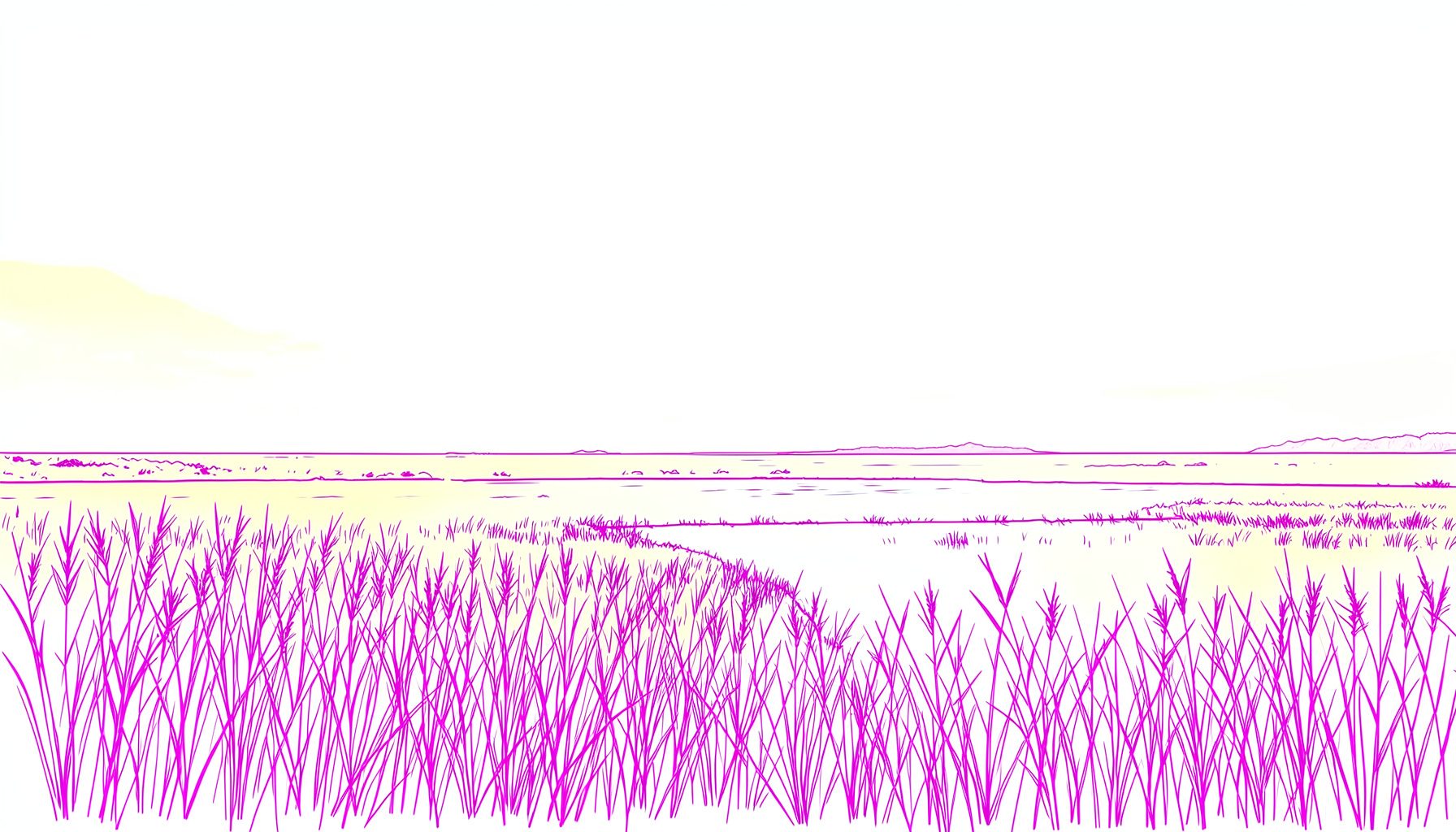
The lake is one of the largest saline bodies in Saskatchewan, and its size creates a mosaic of habitats within a short drive. There are wet mudflats near the inflowing creeks, dry salt-encrusted pans further out, and a fringe of grassland that holds its own breeding birds. As the water drops after the snowmelt, freshly exposed mud feeds calidrids, plovers, and yellowlegs by the thousand.
What really makes the site sing is the volume. On a calm morning, flocks lift off the mud in rolling waves, their calls carrying across the still prairie air. For a continent that often rewards patience with single birds, the density here can feel almost absurd.
Getting There and Where to Stay
The closest service town is Wynyard, about twenty minutes north, with motels, a campground, and basic supplies. From Regina the drive is roughly two and a half hours via the Trans-Canada and Highway 16. A high-clearance vehicle helps on some side roads, but the main viewing points are reachable in any car.
Most birders base in Wynyard or camp at the regional park east of the lake. Farm stays near Foam Lake work well for a slower itinerary that links Quill Lake with Last Mountain Lake or the Quill Lakes Interpretive Centre.
Spring Migration and What to Expect
Late April brings the early movers: American Avocets in cinnamon-and-white breeding plumage, Marbled Godwits with their long bicoloured bills, and the first wave of Lesser Yellowlegs. By the second week of May, diversity climbs steeply, and Semipalmated, White-rumped, and Baird's Sandpipers join Stilt Sandpipers on the flats.
Spring weather is fickle. Mornings can start at minus five with frost on the scopes, then warm to fifteen by mid-afternoon under an enormous sky. Layered clothing, sunscreen, and a wide-brimmed hat all earn their place in the same day.
The Salt Flats and Shorebird Spectacle
The flats are the main act. Walking out onto the crusty white surface, with an inch of water over reflective mud, is a strange experience for anyone used to a tropical beach. The footing is delicate and the salt is hard on boots, but the views more than compensate. Wilson's Phalaropes spin in the shallows, flicking at brine shrimp with needle-thin bills.
Curlew Sandpipers, Red-necked Stints, and Sharp-tailed Sandpipers all turn up here, and any Australian birder will recognise them from the Kimberley coast. Seeing them in northern breeding attire, with rusty caps and bold scapular stripes, is a treat no field guide back home quite prepares you for.
Walking the Mixed Grass Prairie
The lake is only half the story. The surrounding land is a working landscape of cultivated fields, sloughs, and patches of native mixed-grass prairie, and a half-day on foot is well spent. As I wrote in a birding walk through the mixed grass prairie, a slow stroll here can turn up Sprague's Pipits flushing from the grass, Chestnut-collared Longspurs singing their tinkling flight songs, and the occasional Short-eared Owl quartering late in the day.
Western Meadowlarks throw their fluty notes from every fence post, and a careful scan of a low rise can pick up a displaying Sharp-tailed Grouse. The light at this latitude is long and golden, and even a modest walk feels generous.
Beyond the Birds
The Big Quill Lake area is not only a birding destination. White-tailed and Mule Deer are common along the shelterbelts, and Pronghorn Antelope appear on open fields south of the lake. Coyotes move at dawn, and a lucky observer may spot Black-footed Ferret sign, though the animals themselves are extremely hard to find.
The night skies are also a draw. With almost no light pollution, the Milky Way arches over the lake in a way that even Australian bush campers, used to the outback, will find humbling. A thermos, a folding chair, and binoculars pointed upward can round out a long day in the field.
Tips for Travellers from Down Under
Australian birders planning a Canadian spring trip should remember that the seasons are reversed: May here is late autumn at home, which makes it a good window to add a Canadian leg onto a longer international itinerary. Saskatchewan stays on Central Standard Time year-round and does not switch to daylight saving, so the difference from Sydney shifts by an hour depending on when you visit.
Keep an eBird Australia checklist running while you travel, and start a fresh one for each Canadian site. Saskatchewan Bird Trail volunteers share recent sightings freely. Rent a scope if you can, and pack a small repair kit, since salt air and gravel roads do not treat optics kindly.
Field Notes for the Trip
- Aim for the second and third weeks of May for the peak shorebird variety.
- Bring a scope with a 60x or higher eyepiece for distant flocks on the salt.
- Join a Wynyard-area birding group or use a local guide for up-to-date access.
- Pack layered clothing, sturdy boots, sunscreen, lip balm, and a wide-brimmed hat.
- Carry plenty of drinking water, as the saline mud and dry air dehydrate you quickly.
- Set aside a half-day for the surrounding mixed-grass prairie, not just the lake edge.
- Keep a small notebook for behaviour notes, since the light changes every twenty minutes.
The thing to carry home from a spring visit to the Big Quill Lake area is not a long species list, but a sense of the flyway in motion. A single morning on the salt can show a bird in its breeding dress that you have only ever seen in non-breeding grey, and a single evening on the prairie can pin a song in your memory that will follow you back to Broome or Werribee. The prairie is generous: it gives you a few perfect hours, and then it lets you go.
// Latest Posts
Birding News #95 — Holiday Edition
December 2014
Tofield Snow Goose Chase
April 2016
Alberta Bird Lists →
Annual species lists from 2011 through 2018, tracking every bird spotted across the province.
Bird Conservation →
Citizen science projects, the Great Canadian Birdathon, and the WildResearch Alberta Nightjar Survey.
Birding Events →
Coverage of the Tofield Snow Goose Chase, Young Naturalists' Corner, and community gatherings.
Young Birder Resources →
Christmas Bird Count guides, CBC4Kids materials, and resources for new birders of all ages.
Explore the site
Whether you're looking for detailed Alberta species records, tips on bird identification, or news from the birding community, there's something here for every prairie bird enthusiast.
The Alberta Birds section archives year-by-year species counts — from 131 species in 2011 to a high of 175 in 2015. The Conservation category covers volunteer surveys and citizen science opportunities. Events highlights community involvement, and the Resources section is built especially for young birders getting started.
Check out the Birding News series for curated links and stories, or browse book reviews covering field guides and prairie birding literature from publishers like Greystone Books.